Thursday, March 28, 2013
Simon Says Animation
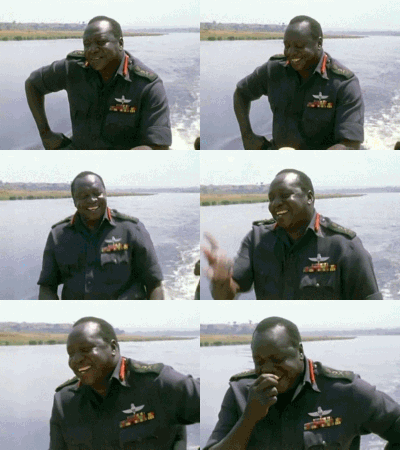
Here is a short animation I made in the past few days. It took far too long, but I think it turned out alright in the end.

Wednesday, March 27, 2013
Abbr.
It's pointless to abbreviate words if:
• They make more sense as the original
• They have the same number of syllables as the original
In addition, if you are talking, over abbreviating on average takes more time. More often than not the other person won't understand, and you have to take additional time explaining.
This happens a lot when you talk to college students. Colleges are full of abbreviations, from the university names themselves, the names of the buildings, and majors. Is it really too difficult to say "Political Science"? PolySci doesn't really save much time/effort. I can understand BME for "Bio-Medical Engineering," but seriously. Communication is always important, and being clear is key.
Tuesday, March 26, 2013
Restaurant Conveyer Belt
People are good, but automated machines that do the same job are better. In this case, I have an idea that would make traditional waiters obsolete.
When the food is ready for a table, the cook places the plates on a conveyer belt that takes them to the appropriate table. The conveyer system is hidden in the walls, and has openings at each table, so things can be delivered. Also included would be a touchscreen at each table so people can make their orders. It would have all the options available, and even have a spot for people to add special requests. If you need a drink refilled, or an extra straw, or something of that nature, you can press the button on the touchscreen, and someone in the kitchen will send the needed item your way.
I have included a mock-up design of a restaurant fitted with this technology.

The only problem I foresee if is someone spills something in the conveyer. That would be messy.
When the food is ready for a table, the cook places the plates on a conveyer belt that takes them to the appropriate table. The conveyer system is hidden in the walls, and has openings at each table, so things can be delivered. Also included would be a touchscreen at each table so people can make their orders. It would have all the options available, and even have a spot for people to add special requests. If you need a drink refilled, or an extra straw, or something of that nature, you can press the button on the touchscreen, and someone in the kitchen will send the needed item your way.
I have included a mock-up design of a restaurant fitted with this technology.

Monday, March 25, 2013
Sorry, Gone on Vacation
I remember the days when saying you were gone on vacation was an excuse to not respond to (usually business) emails. Now with smartphones there is absolutely no excuse since most people have internet access 24/7, no matter where they go.
Since I don't feel that justifies its own post, here is a picture I drew of a bunny (coincidentally on vacation, after he responded to his urgent business emails).

Since I don't feel that justifies its own post, here is a picture I drew of a bunny (coincidentally on vacation, after he responded to his urgent business emails).

Thursday, March 21, 2013
Love Triangles
A good plot is crucial to a good story. One of the oldest and most widely used plot devices is the love triangle. Two guys chase one girl, or two girls chase one guy. Same old same old.
But, why stop there? We should extend this to geometries of all sorts. Imagine the complex web left after a child has unrestricted access to a can of silly string. It would be a story so full of short-term relationships it would resemble middle school dating habits.
A love story of that scale makes love triangles seem like children's stories.
Wednesday, March 20, 2013
Sad African Children
In advertisements for organizations helping people in third world countries, they always show pictures of the cute children. Although it helps get their message out, I feel like it's pure manipulation. It's like those commercials for restaurants. Of course your hamburger isn't going to look perfect, nor is your drink going to splash perfectly in slow motion.
The problem is people want to believe that they are improving the life of some small child. Why not show pictures of the teenagers? Because they usually don't look nice. They look threatening, hard, and mean, and they do not elicit the intended reaction.
I'm not saying these organizations are bad, but their tactics are.
Tuesday, March 19, 2013
Obama's Bracket
Is anyone else slightly concerned that Obama has an NCAA bracket? I know he's done it in years past, but it seems like it might provide room for interference.
I can see it now. It's an important game in Obama's bracket. Last quarter. His team down by 5. The lights go out. Darkness everywhere as people are lost and confused. The lights come back on. The opposing coach - gone. The secret service members are already outside the arena, shoving the coach in the back of a cop car. The opposing players, confused by the dramatic turn of events, lose their focus as well as the game. Obama, laughing quietly to himself in the White House, fills in the name of his choice on the designated line on the bracket.
I can see it now. It's an important game in Obama's bracket. Last quarter. His team down by 5. The lights go out. Darkness everywhere as people are lost and confused. The lights come back on. The opposing coach - gone. The secret service members are already outside the arena, shoving the coach in the back of a cop car. The opposing players, confused by the dramatic turn of events, lose their focus as well as the game. Obama, laughing quietly to himself in the White House, fills in the name of his choice on the designated line on the bracket.
Monday, March 18, 2013
King Sized Beds
The true purpose of large mattresses alludes me. I can understand the point if two large people and their dog sleep together, but for a single person, what is the point of anything larger than a normal sized (I think this might vary based on your country of residence) bed?
At a certain point, there is only so much space you need. Whenever I stay at a hotel with a large bed, I feel as if I only use half of it. The other side really has no benefit to it. (Even in rooms with two separate beds). If you are a seven-foot-tall basketball player who likes to sleep arms and legs spread like a kid making an angel in the snow, then fine.
That last image prompted a rather intriguing theory. What if the person who came up with the bed size system and what is considered "normal" is actually a really large man who got angry when beds weren't big enough. Maybe he had to sleep in a small bed for all his youth and then devoted his life to making sure no one would have to face a similar experience again.
A more reasonable theory would be that it relates to the status symbol of furniture. I know many houses that have chairs set up that never actually get used, and are purely there for show. Having a larger bed would imply a higher class just like a fine sitting area would imply an inability to properly purchase furniture. The names given to bed sizes such as "King" and "Queen" support this theory as well.
Thursday, March 14, 2013
The Great Chocolate Frosted Sugar Bombs Treasure Hunt!
Want to go on an adventure? Click the image below to begin the first annual Chocolate Frosted Sugar Bombs Treasure Hunt!

Wednesday, March 13, 2013
Roller Coaster Graph
This has definitely been done before, but I don't particularly care.
Here is a scientifically accurate graph of roller-coastery-ness over time for your average roller coaster.

Here is a scientifically accurate graph of roller-coastery-ness over time for your average roller coaster.

Tuesday, March 12, 2013
Inefficient Construction Methods
I always get mixed feelings when I see a picture of something that is proclaimed to be amazing because of its inefficient construction. "Wow, look at this life-sized moose statue, made completely from toothpicks!" It's an accomplishment because of the time and patience necessary, but there are much better ways to build a moose statue.
It's like origami - sure it's cool that you can make things purely by folding, but I bet I could do it a lot quicker with scissors and some tape.
It's like origami - sure it's cool that you can make things purely by folding, but I bet I could do it a lot quicker with scissors and some tape.
Monday, March 11, 2013
Déjà vu
Déjà vu is one of the oddest feelings ever. Most of the time for me, I feel like I have been in the same situation in a dream before. Sometimes I randomly duck, hoping an object will fly over my head and I will save my own life, as well as looking awesome in the process.
I am not going to try to explain what causes it, but my personal theory is that I traveled back in time to that moment. We feel as if we have experienced a certain moment before because we actually have. In the alternate universe, I made some terrible mistake, having to retrace my steps to before the incident. Of course this usually involves some heroic situation of the world on the verge of destruction, as I desperately push the button to send me back in time as lasers shoot everywhere and explosions come from all angles.
But I usually just stop for a moment, then continue on with my day.
Thursday, March 7, 2013
Practice - Opportunities
Although it may seem too late to get 10,000 hours into any one activity, it probably is not. In an entire lifetime, if you are extremely motivated and have very little restrictions, you could become a master in about seven different areas.
The most important thing about practice is that it should be enjoyable. In order to succeed at anything, it has to be something you actually want to do. Practice shouldn't be a chore. It should be a fun way to improve at something genuinely of interest.
One final note. At the end of the day, it doesn't really matter if you have 10,000 hours or are a master of anything at all. The more important thing is simply doing, creating, or starting something. You won't be good at anything unless you start out bad at it.
(One exception of note would be this blog. I don't know about you, but I think I exploded onto the scene with that idea about apples.)
Wednesday, March 6, 2013
Practice - Time Scale
Malcolm Gladwell in his book Outliers theorizes that in order to master something, you have to log 10,000 hours in that activity. He uses a variety of examples to prove that there is always a general range of time required to be the best in any area.
On first impression, 10,000 hours doesn't seem like that much. After you think about it for more than ten seconds, however, you begin to see how daunting of a task it can be. If you think about anything you consider yourself "proficient" or "very good" at, estimate how many hours you have in that activity. It can be a related activity as well. For example, if I were to claim I was good at drawing funny graphs, I would not only count the time drawing the graphs, but also the time spent making graphs in school, as well as time drawing in general. In most cases, unless (even if) you are a professional, you don't fall anywhere near the 10,000 hour mark.
I have a theory about how people develop in their activity over the span of 10,000 hours. Note that none of this is based off of any scientific data, and I probably have no idea what I am saying.
0-10 hours: Just beginning, building interest, and exploring basic strategies.
10-100 hours: Becoming proficient. At the end of the 100 hours, you are most likely better than the vast majority of people.
100-500 hours: Learning and in-depth analysis. At this phase, you have mastered the basics.
500-1000 hours: Serious business phase. You are now good enough that you have to really be engaged to continue improving.
1000-3000 hours: Waning development phase. There is significant improvement during this time, but it comes very slowly. You may even decrease in skill level for short periods of time (10-100 hours), but eventually improve in the end.
3000-6000 hours: Grinding. Pure exposure to a multitude of situations. "Expert" level.
6000-10000 hours: Mastery. Everything is down to a science. New experiences become very rare. No outside instruction is any longer of much benefit.
10000+ hours: Payoff phase. As one of the best in the world, you are legendary in that field.
Tuesday, March 5, 2013
Practice - How Did You Do That?
"Practice makes perfect." Of course we know this - our parents, teachers, and friends have told us this throughout our lives. We understand that in order to be a great piano player or athlete you have to have a lot of practice. However, in many cases, it is easy to fall into the belief that there is an exact methodology to being the best at something.
Let's use the example of free throws in basketball. Because of official basketball regulations, the distance between the player and the hoop, the height of the hoop, and the size of the ball are always constant. Therefore, it would be easy to assume that there is a method to always make free throws. All you would have to do is have an expert explain the mechanics, and you should be able to have a perfect free throw percentage, right? Surely, there must be a way to throw the ball with the correct speed, height, and arc to make it in every time. Unfortunately this is not the case, and to have a perfect free throw percentage, you need a lot of practice. After a certain skill level, no more instruction is beneficial, and you have to experience the many outcomes of a free throw to master it.
Let's use the example of free throws in basketball. Because of official basketball regulations, the distance between the player and the hoop, the height of the hoop, and the size of the ball are always constant. Therefore, it would be easy to assume that there is a method to always make free throws. All you would have to do is have an expert explain the mechanics, and you should be able to have a perfect free throw percentage, right? Surely, there must be a way to throw the ball with the correct speed, height, and arc to make it in every time. Unfortunately this is not the case, and to have a perfect free throw percentage, you need a lot of practice. After a certain skill level, no more instruction is beneficial, and you have to experience the many outcomes of a free throw to master it.
Monday, March 4, 2013
Practice - Introduction
Over the next four days I am going to write a mini-series about practice. There are a a variety of topics to cover, so splitting it up makes the most sense.
The general idea behind practicing is that you are exposed to nearly every possible situation. Through massive numbers of trials and errors, you learn the best course of action in every circumstance. In addition, you build up muscles memory. Whether it is the arm motion in bowling a bowling ball or the hand movements of painting, you can develop a "feel" for your activity.
In general, people want to achieve great things, and the most surefire way to do so is practice.
Subscribe to:
Posts (Atom)